Will Enterprise 2.0 software take its cue from Portals?
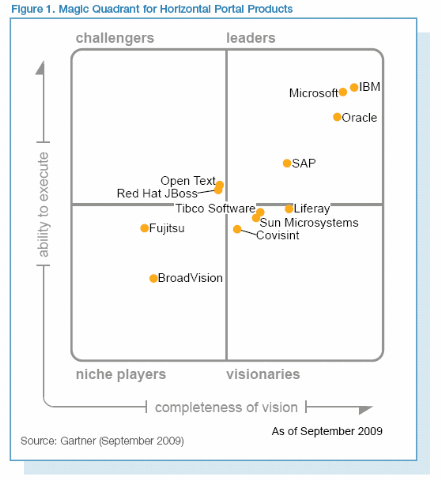
I just saw something go by by my tweet stream that brought back some old memories (thanks @rpolom) – the 2009 Gartner report on the horizontal Portal Vendor landscape. Here’s the Magic Quadrant:
Around 2001, I led a strategy and execution planning engagement for a then F500 Hi tech firm looking to recast how its 9,000 strong global sales force collaborated with the rest of the ~40,000 person organization. My teams charter was to identify breaks in the interaction process with sales engineers, global field marketing and sales operation and devise a plan to improve the ‘contact to revenue cycle’ for sales reps via new collaborative constructs and sales intelligence access.
As part of this we were also on the hook to put an execution and operational plan in place. That ended up including a technology solution from the portal marketplace – the sizzling hot technology that promised to provide a single homepage to data and information from scores of traditional ERP and custom built systems. My team looked at 27 vendors. Yes 27! Here’s the list from one of the drafts that I dug up:
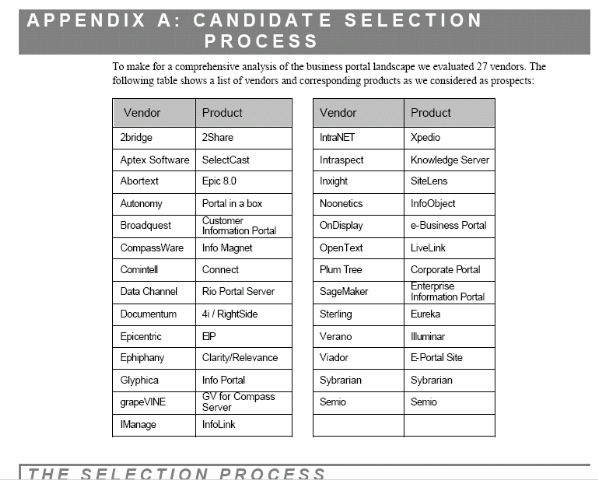
Thats a snapshot of where this Portal Market started. And look whats left based on the Gartner MQ above.
On to the Enterprise social software landscape:
Dion Hinchcliffe’s lays out the market in this vendor landscape diagram in this post “Assessing the Enterprise 2.0 marketplace†below thats a prettier E2.0 software equivalent to my table above.

The Enterprise 2.0 solution landscape may well track the portal market evolution. To be fair, Enterprise 2.0 software does a lot more than portals but there’s some parallels to be drawn. Portals brought it all together with personalization around data and unified system access. But no cognizance of context or behavioral design for each participant type. A good chunk of Enterprise 2.0 software also promises people interaction and activity stream access as a better option to static portals. But for the most part, out of the box, it’s still general purpose ‘build it and they will come’.
That said, there’s a difference this time around. I’m seeing more and more instances of process centric business challenges where social software can help tremendously. As a consulting practice, our focus is enterprise performance acceleration and so that’s validation. The good news is that customers seem to be pushing social software/ E2.0 technology vendors to fix business processes relatively early in the lifecycle of this technology category compared to portals. That’s great news for both technology and services vendors that have a solution set and credible experience to help customers respond to real business problems. In other words, sensible applicable of social constructs as opposed to social as the cure all.
As for the E2.0 upstart vendor and services marketplace, I expect that a handful of vendors will do very well based on a “replace your intranet†value proposition. Even out of the box, the social software stack is far better than static intranets but its becoming a commoditized business. The rest better start focusing on line of business performance if they don’t want to get left by the wayside. In fact, as I’ve stated earlier, I think the market is far larger for that anyway.
Using Dion’s diagram as the E2.0 equivalent of my portal landscape cut out, any bets on what which names we should expect to see on the Garter MQ for Social Software in 2-3 years?

[…] 28, 2009 · Leave a Comment Talk about a trip down memory lane… Another excellent blog post yesterday by my friend and fellow Babson College alum, Sameer Patel, snapped me back a few years […]
[…] on his ZDNet blog. And I’ve written before about the risk of the E2.0 marketplace facing the same fate as portal vendors. That continues to be a genuine […]